
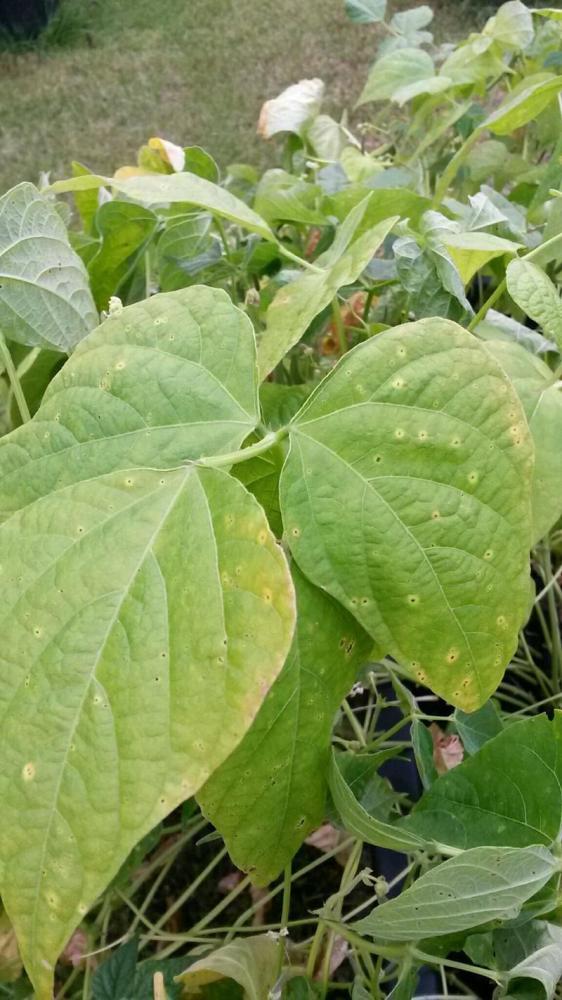

Bacterial Leaf Blight
Bacterial leaf blight is a plant disease that often appears as small spots on leaves. These spots may be surrounded by yellow halos or pale areas. The infection may start lightly, then spread faster when humidity is high and leaves stay wet for long periods.
Early detection is important because managing the disease at the beginning is easier than controlling it after it spreads widely.
Symptoms of Bacterial Leaf Blight
Symptoms usually appear on leaves first, and severity may vary depending on plant age, humidity and plant spacing.
Common symptoms include:
- Small water-soaked or pale spots on leaves.
- Yellow halos around some spots.
- Brown or dark centers as spots develop.
- Yellowing and weakness in affected leaves.
- Drying of leaf edges or affected areas in advanced cases.
- Faster spread during humid weather or after overhead irrigation.
Small leaf spots with yellowing around them should be monitored early.
Causes of Disease Spread
Bacterial leaf blight spreads more easily when moisture is high and air movement is poor. It can also move through water splash, tools, hands or infected plant debris.
Main factors that increase spread include:
- Overhead irrigation.
- Crowded plants and poor ventilation.
- Infected plant residues.
- Handling or pruning plants while wet.
- Water splash from infected plants.
- Using unclean tools between plants.
Prevention
Prevention is the most important step because bacterial diseases are difficult to stop once they spread.
To reduce infection risk:
- Avoid wetting leaves during irrigation.
- Use drip irrigation or water near the soil.
- Improve air circulation between plants.
- Do not handle or prune plants while wet.
- Remove severely infected leaves.
- Clean pruning tools after use.
- Dispose of infected plant debris.
- Monitor plants after humid weather or rain.
Management
When symptoms appear, the main goal is to reduce disease spread and protect new growth.
Recommended steps:
- Isolate the infected plant if possible.
- Remove heavily infected leaves.
- Reduce leaf wetness.
- Improve ventilation around the plant.
- Use a suitable product labeled for bacterial diseases.
- Follow the label rate and safety instructions.
Some copper-based products may help reduce disease spread, but they do not restore already damaged leaves.
Summary
Bacterial leaf blight often appears as small leaf spots with yellowing or halos around the infection area. It spreads more easily with humidity, overhead irrigation and poor ventilation.
The best management is early action, reducing leaf wetness, removing infected parts and improving growing conditions to limit disease spread.